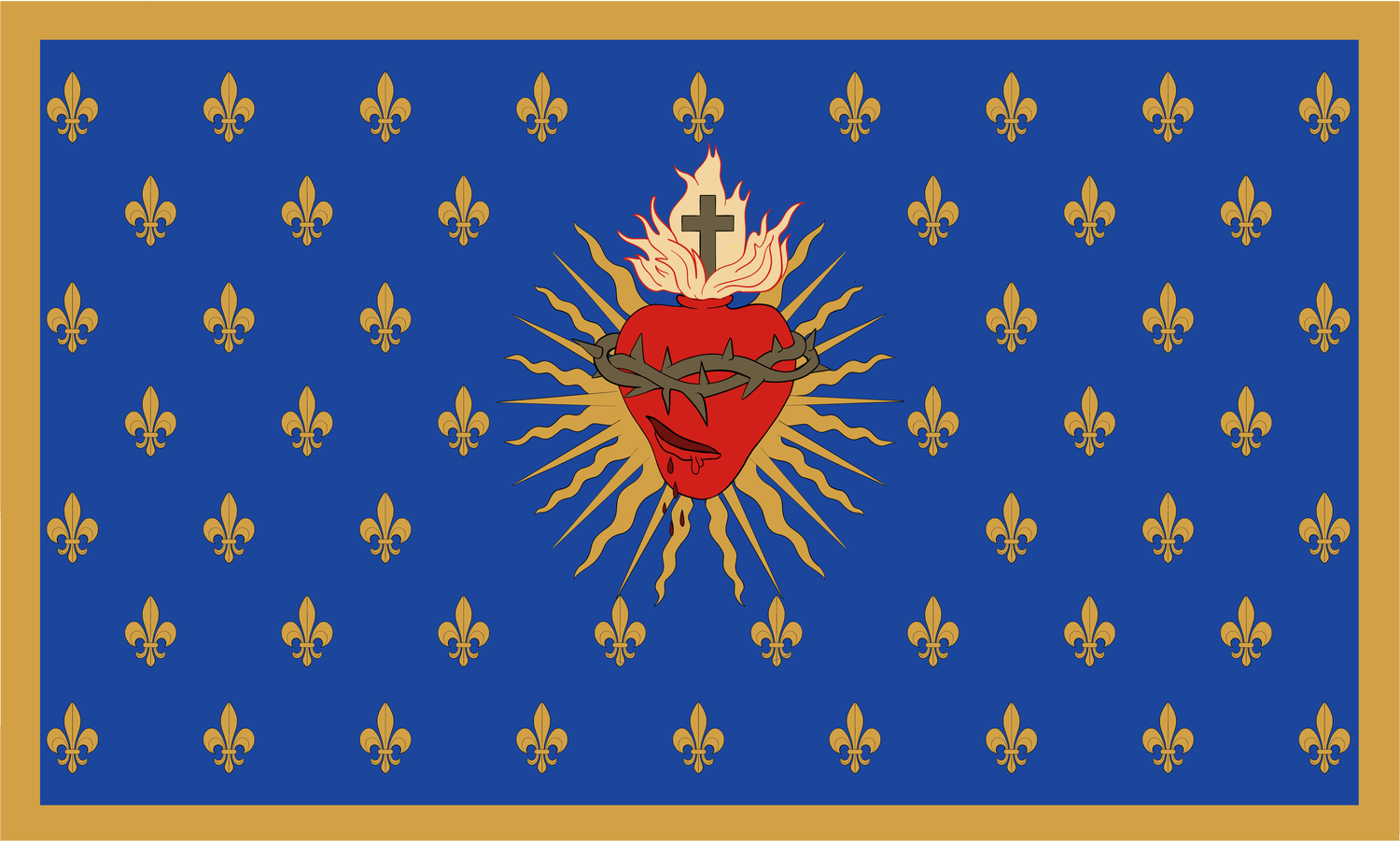
La Belle Dame Sans Merci
Anyone who’s spent some time in downtown Covington, Louisiana is familiar with the historical markers indicating the many Ox Lots in the midst of her city blocks. Now used as public parking, these communal livestock holding pens once provided space for instruments of value far less susceptible to rapid depreciation.
In the Florida Parishes - before their annexation by … freedom fighters - cattle and hides were the backbone of value, even to the point that cows or steers were considered a standard unit of account (for instance, one might speak of “hides” just as one speaks now of “dollars”).
Cattle and hides could be used to pay rent. buy land, compensate laborers, settle debts; it could be converted into trade goods or even into silver. Back to Covington’s hallmark Ox Lots … These functioned not merely as containment, but as clearing houses and payment vaults - living banks that where real value was stored, counted, inspected, and transferred. You’ve got an ox, you also have salt, ammunition, tools, or clothing — and the man with whiskey or pork might also have a cow (literally). Simply put, real value exchanges occurred in a communal space where value could be assessed and transactions could be completed — no floating digits, just durable goods. Now, one might easily and obviously contest that this system could never have rivaled the modern efficiencies of printable, fiat currencies, and such a one would most certainly be a twit. For the IQ-impaired, cows qua cows cannot be printed. [Immediate block for those who mentioned lab-grown meat] As hilarious as it could be to point out all of the ways in which our value-exchange system has degraded as often as technology has upgraded, planned obsolescence isn’t a subject I particularly enjoy dwelling on … not to say that technology must-needs tend toward evil, degradation, and destruction: for example, we no longer have the skills and knowledge to rival such a thing today, but voilà Chartres Cathedral.
The Good Kind of Pluralism
… and the bad kind.
In the French and Spanish era, Louisiana enjoyed a value system involving many species: cattle and hides (as we have mentioned), hogs, corn, rice, indigo, sugar, silver pesos and ecús, the famous Dix, merchant book credit, etc.
This many-headed hydra provided a network of exchange that could not be easily tampered with, assaulted, or debased.
But along came Sally ( … Mae?).
When the purveyors of freedom, justice, and liberty arrived, the U.S. dollar was imposed as the only legal unit of account.
In an instant, an independently wealthy and hardworking Creole farmer faced insolvency: his durable-value properties were artificially - and criminally - debased with a fantastic sweep of a pen.
A system based on the common good and equitable exchange, a system requiring and supporting the cooperation and collaboration of friends, neighbors, and communities — a system that fostered virtue in the real value of reputation — was supplanted. Land held for generations and acknowledged by all Louisianais (so we called ourselves then) as belonging to a particular family became public American lands available for purchase if no papers could be produced. No papers. Papers. The generational-Louisianan family with metaphysical rights to their property via blood, sweat, and tears would then be forced to pick up and leave or buy back their own land with “dollars” they didn’t have - which means banks, which means mortgages, which means gay. The entire shift — a geographical, political, economic, and social annexation — favored outsiders already established in the “dollar” “economy” (allow me to emphasize the quotation marks) who had access to banks, punished true Louisiana locals whose wealth was … well … actual wealth, and totally destroyed the economic strength and hegemony of the people who lived in, worked in, laughed in, played in, married in, and populated and cultivated Louisiana to make her beautiful and rich. What do we call that? You called it: Diversity, Equity, and Inclusion.
Cui Bono?
It may cross the mind of any inhaling and exhaling individual that there just might be a question as to the legitimacy of this entire program of expansion. However, this little exploration of mine — at least at this point in time — won’t venture into the legal and political scene in which some kind transfer (legitimate?) or other happened at some point in time or other and Louisiana was subsumed into the GREAT AMERICAN PROJECT.
In lieu of that somewhat exhausting analysis, I’ll close with an imaginative exercise: Louisiana was Catholic and synonymous with Catholicism. Louisiana culture bore Catholicism and Catholicism bore what would become Louisiana culture to this sacred land we call home - tout les deux.
Pleased to be Louisianais and pleased to be Catholic, you are watching the incursions of the United States with an already-leery eye, suspicious of a new, experimental sort of political body that seeks the absolute liberty of man and chatters about “happiness” as some sort of praiseworthy end (tortured memories of shiny apples). One day, you’re reading Le Courrier de la Louisiane (or perhaps the Moniteur de la Louisiane or L’Abeille de la Nouvelle-Orléans), and you happen upon a headline reporting on the oncoming alteration of the geographical designation of an area within the bounds of La Paroisse de Sainte-Hélène to “St. Tammany Parish”. From a snatch of talk here and a bit there, you finally figure out the meaning of the mystery (having had no success raking through all the feast days and commemorations in your Missel) …
“Tamanend” is a demigod of this new American ethos. The man himself was a native friendly to the Revolution, but his mythos grew until he became a symbol of natural virtue (as opposed to, you know, supernatural virtue), a replacement for the Christian saints (think early iteration of the prostitute “goddess of Reason” traipsing about on the altar of Notre Dame). Foreseeably, the name “Tammany” was popularized by the anti-monarchical, anti-clerical, and anti-Catholic “Tammany Societies”. In effect, this was like a ceremony of ritual humiliation of the Catholic Louisiana natives:
A real Catholic saint (the mother of Emperor Constantine) was replaced with a secular, republican mascot, yet “saint” was retained, suggesting — blasphemously — what would really be “holy” in this revolutionized Louisiana where the newly-empowered Anglo-American protestants engaged in the systematic de-Catholicization of public life.
But what if it didn’t have to be this way?
Short of soaring to federal prison or engaging in open warfare, what if — by Providence — there were some way to reverse the cultural, economic, and civil misfortunes of our beloved Louisiana? This will be the subject of the next article in this series. Thank you for reading, and stay Louisianais.